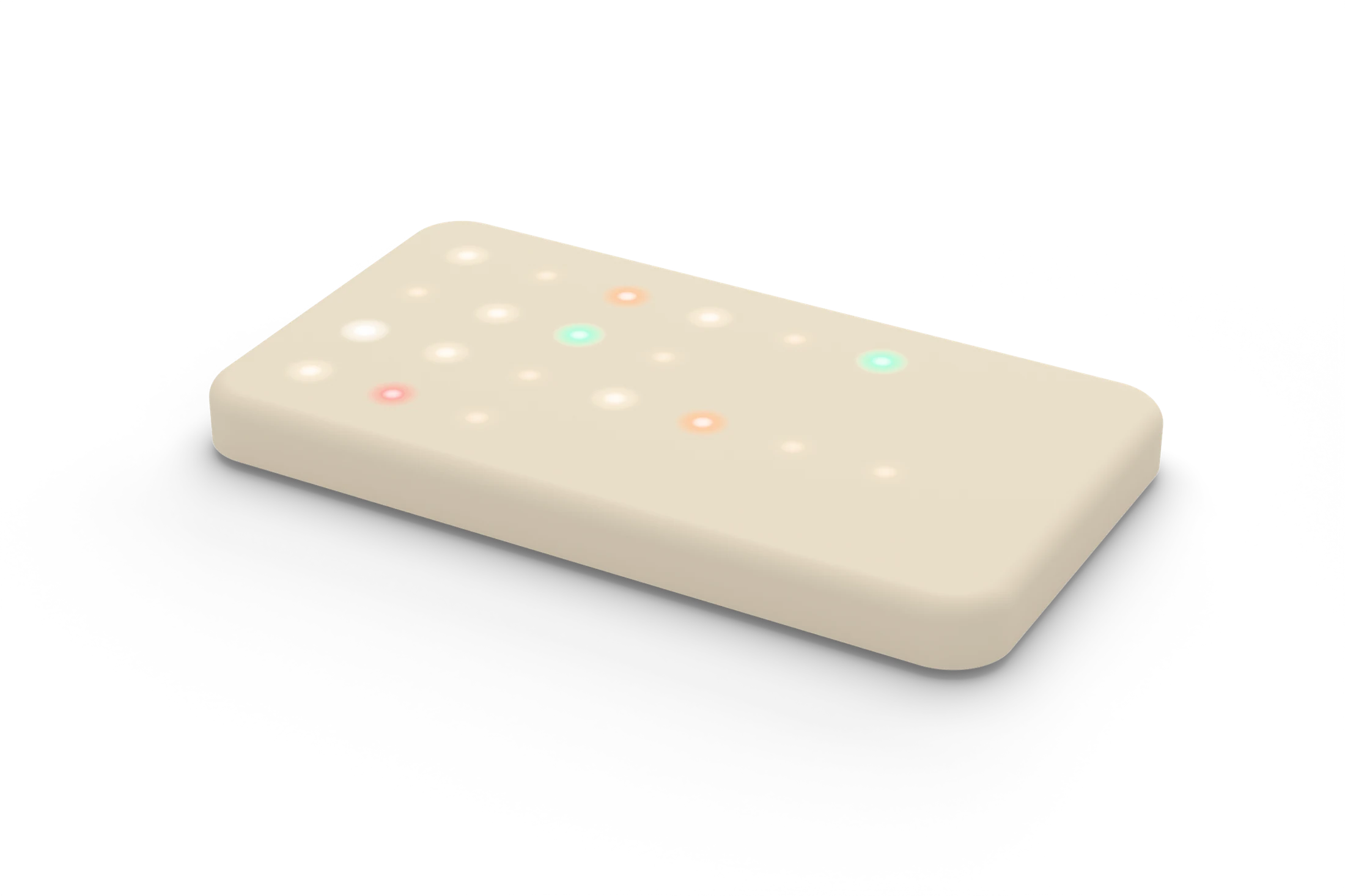
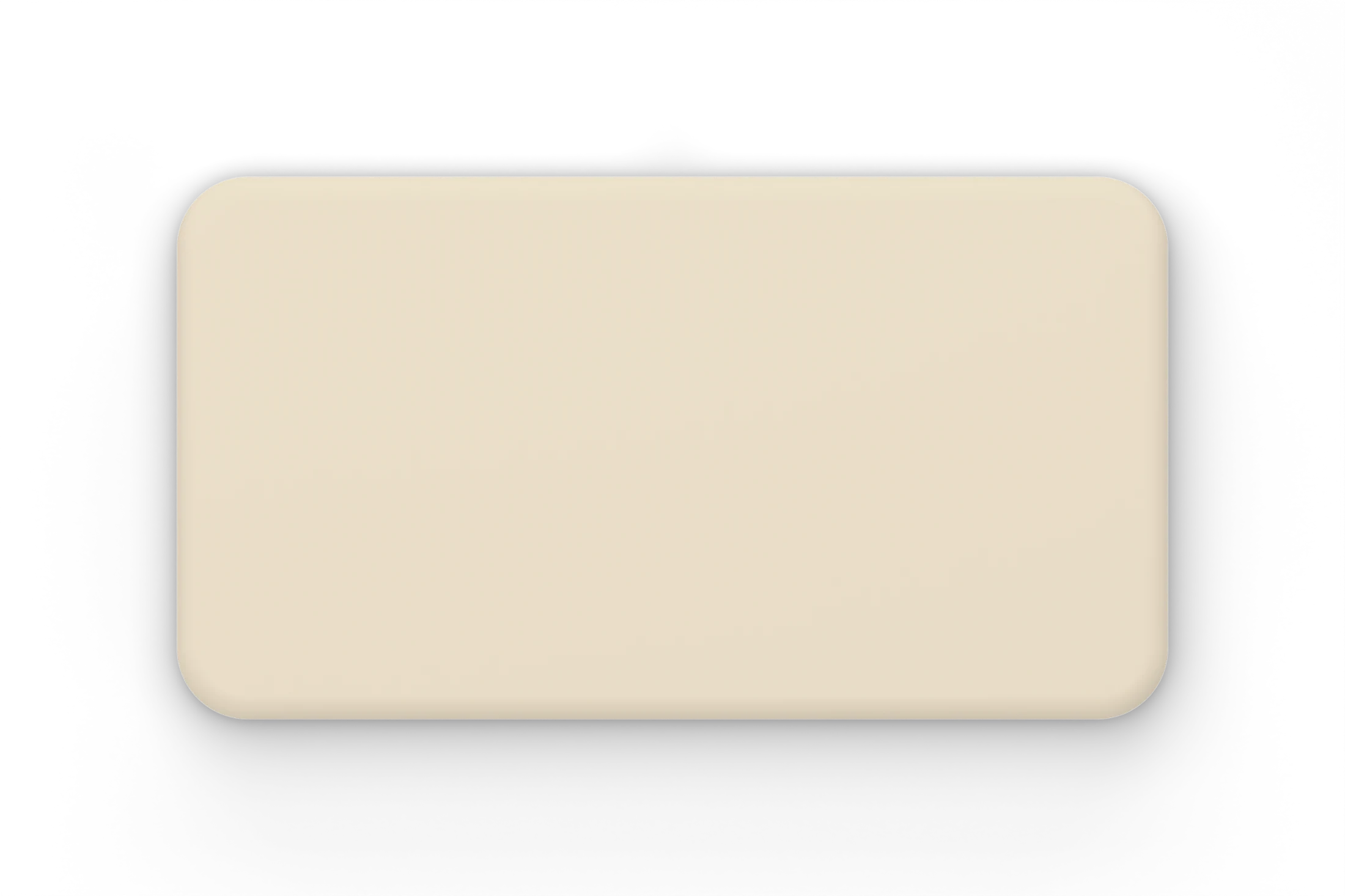
a desk control surface for agents, as a soft pebble under one silicone skin. first integration: rex by superlogical.
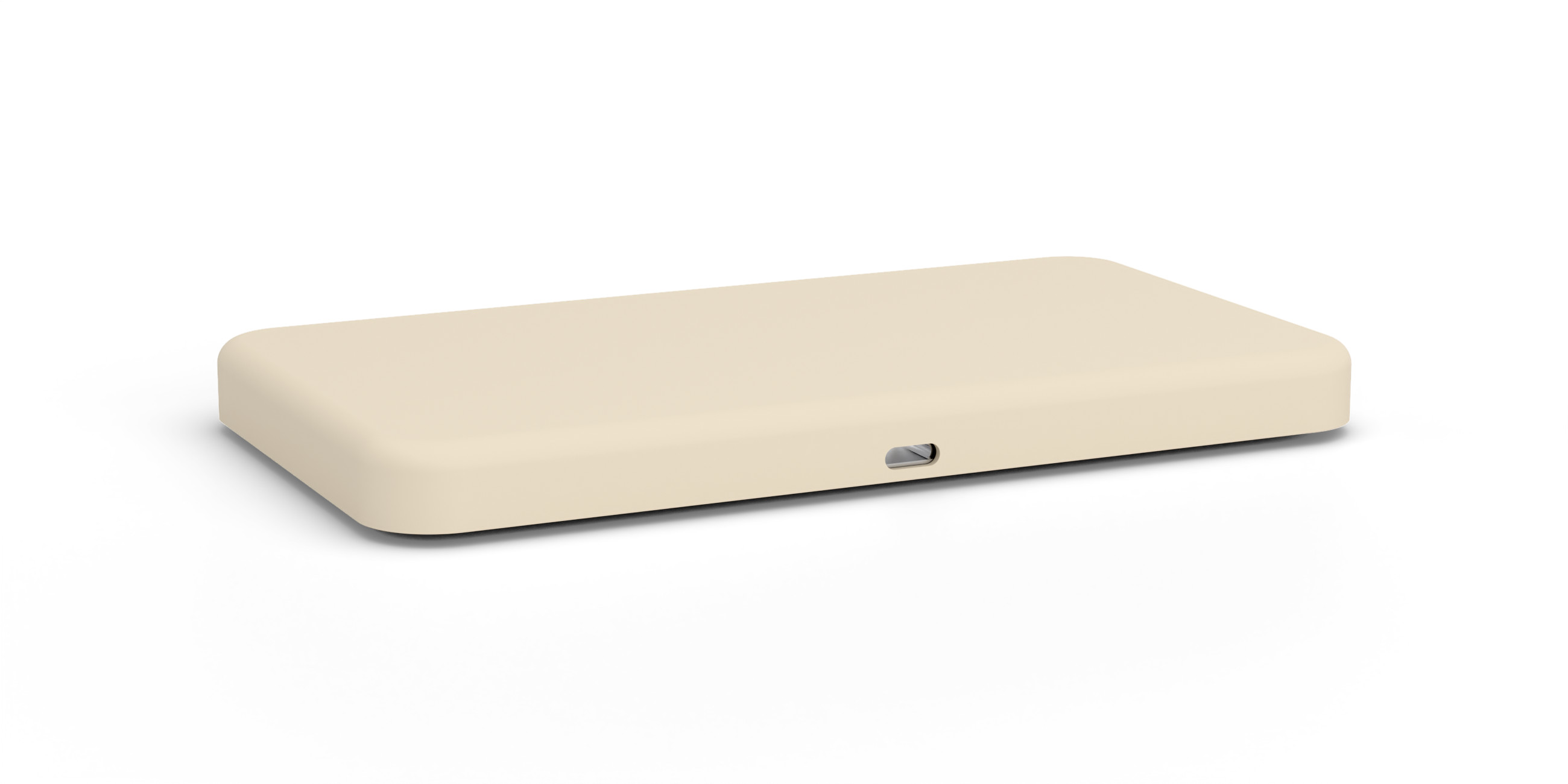
wired usb-c. no keys, no seams, no screen.
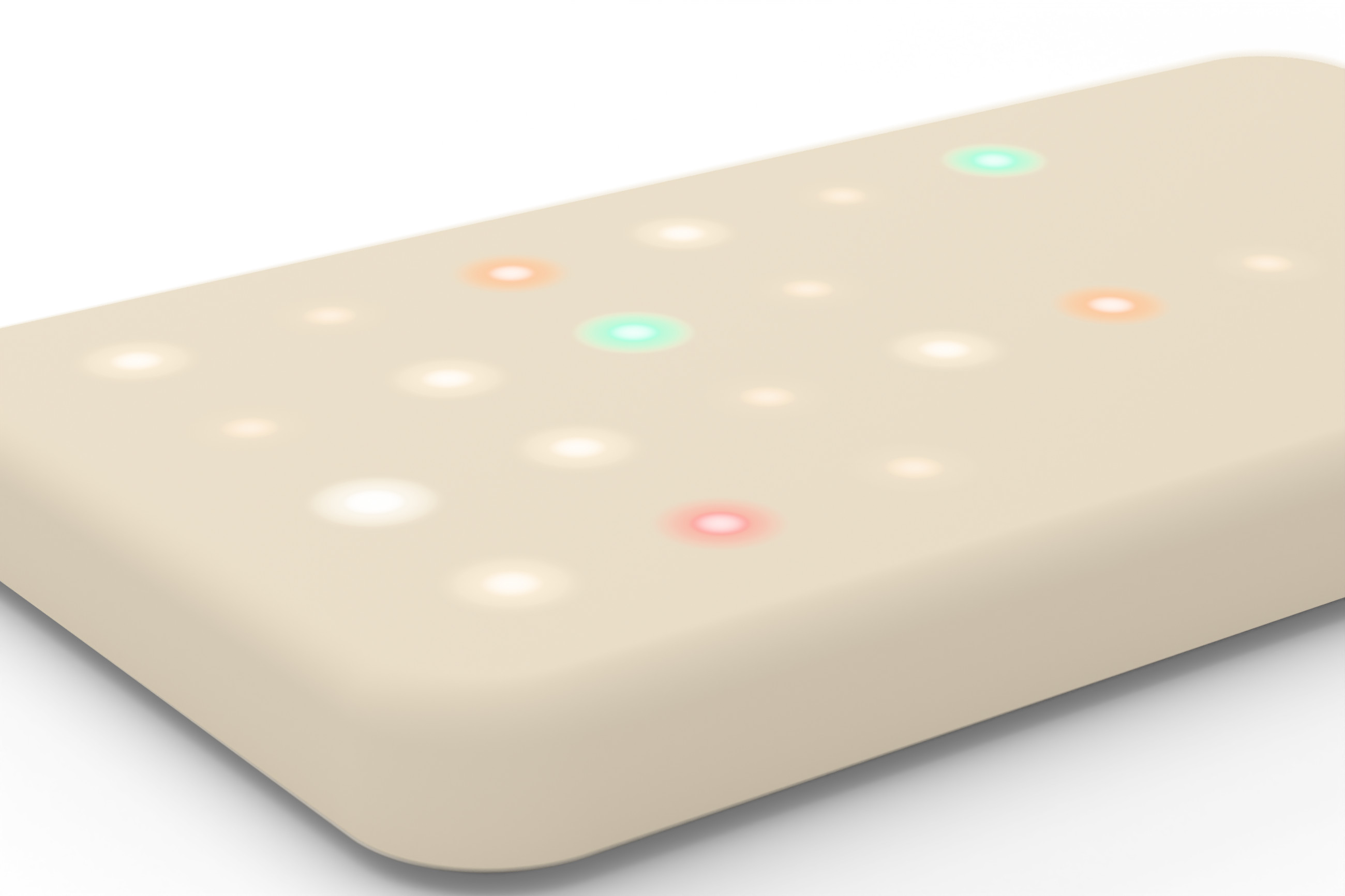
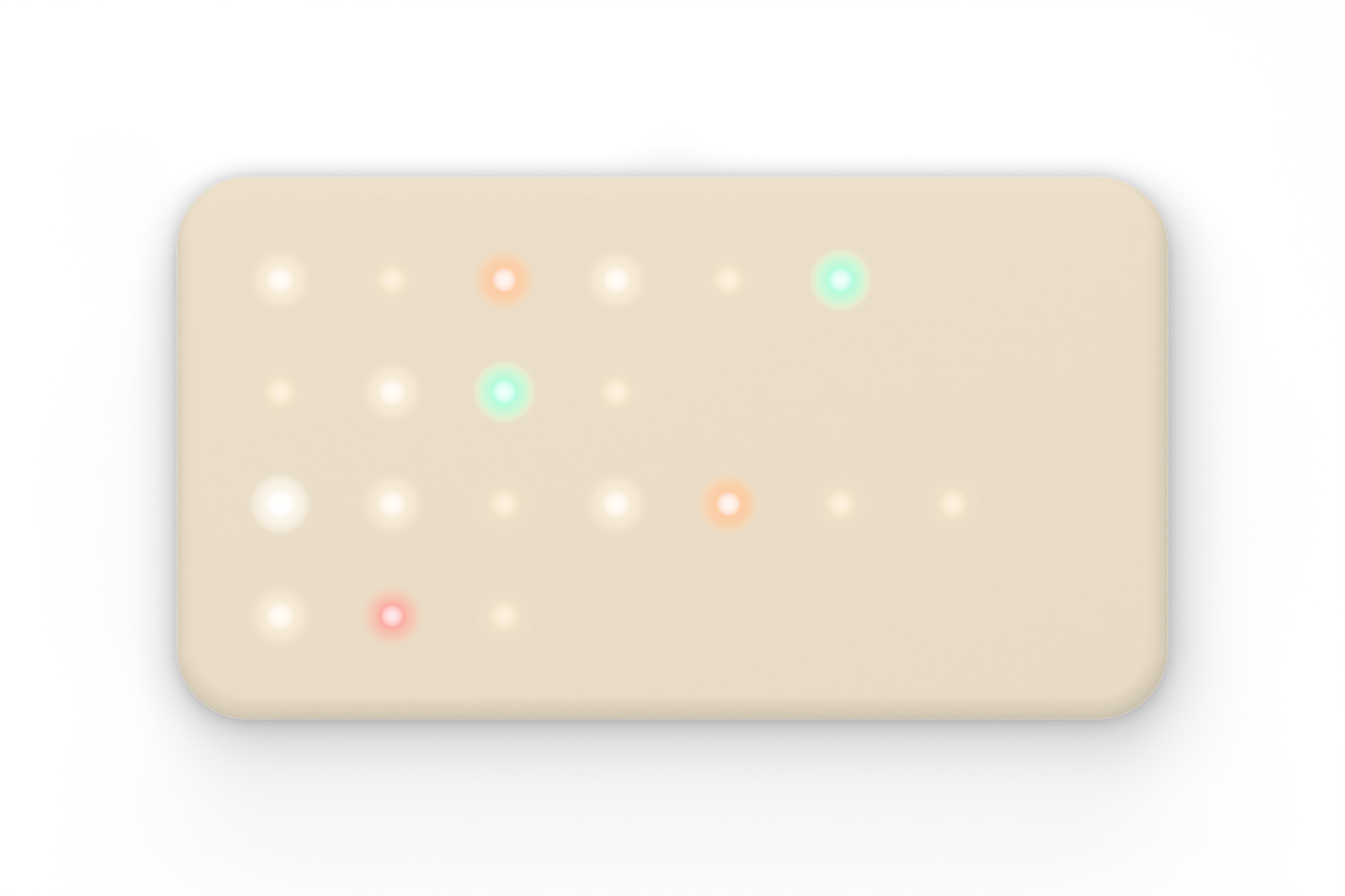
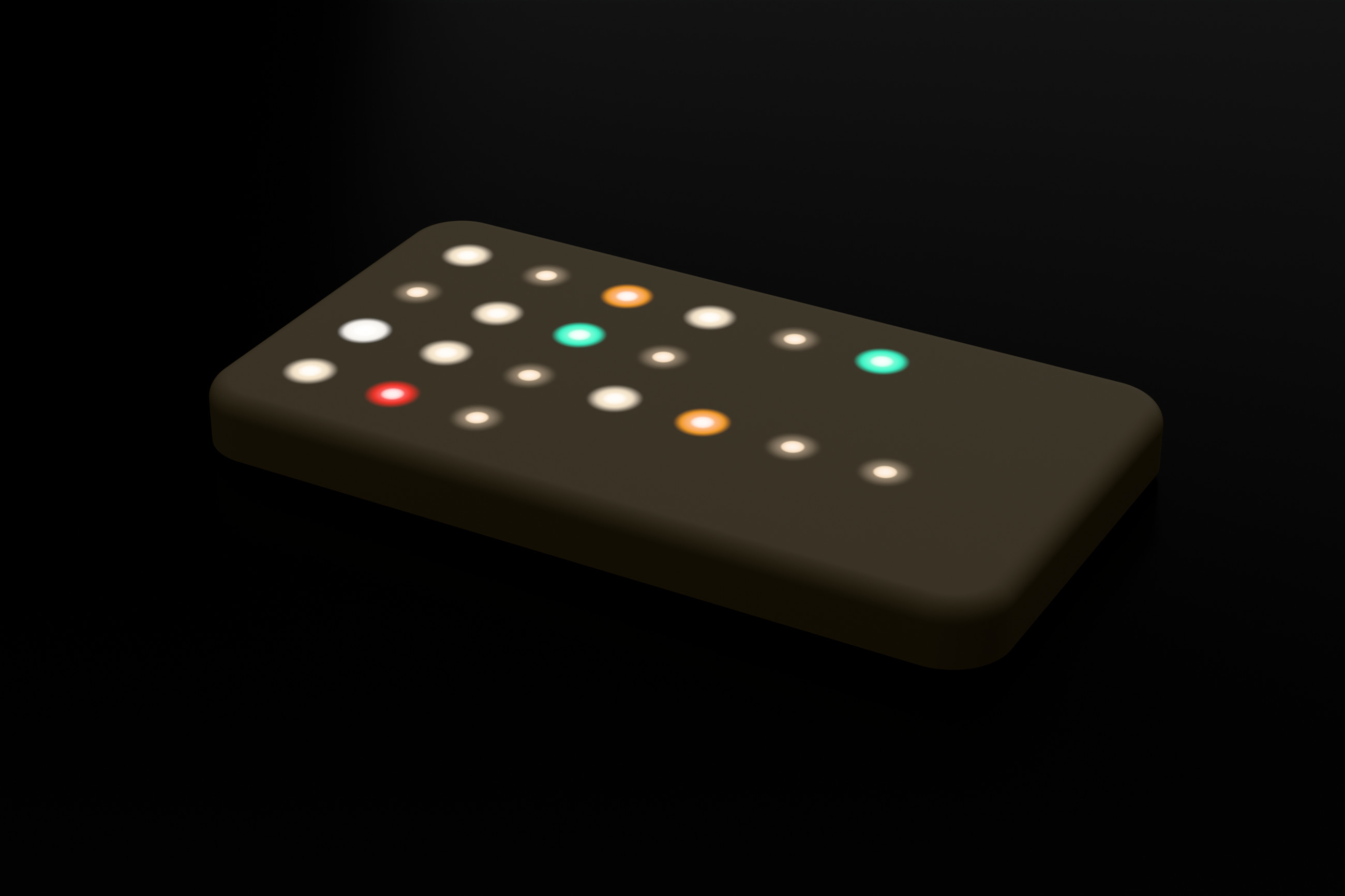
a row {} for every session, a dot {} for every tab. press {} and you are there.
168 × 92 × 13 mm
about 416 g, under one silicone skin
32 zones, a light and a click in each
one port, usb-c, bus powered
how it works
a row is a rex session: one project, such as web, api, ios or docs. four rows.
a dot is a tab in that session, in tab order, lit with its state. eight to a row. the host sets each light.
press a dot and rex jumps to that session and tab. states come from rex program status records (osc 7501).
webapiiosdocs
several panes in a tab: blocked > error > working > done > idle.
dot
none pressed yet
device sends
0x81 key [index, down]
rowd runs
rex -C client do session.select session_id=… window_id=…
light through silicone
orange is the only colour that moves fast. if nothing is orange, nothing needs you.
beige absorbs blue, the weakest led channel. so the palette is warm white, green, orange and red, corrected per channel in firmware.
est. 8–20% of the light passes 1.0 mm of pigmented silicone, under 5% at 2 mm. no supplier publishes this; a stepped test plaque settles it before the tool is cut.
form
a soft pebble. 12 mm corners, a 4 mm soft top edge, about 416 g by the cad.
one continuous matte silicone skin in a light warm beige. no raised keys, no seams, no apertures on top.
the same idea with raised keys in machined aluminium is the other study.
168921917.519r 12
millimetres. 32 zones on the 19 mm keyboard pitch. each cross is a press and a light. the drawing is the chassis deck, inside the outline of the skin.
1315.2
13 mm body, 15.2 with feet.
inside
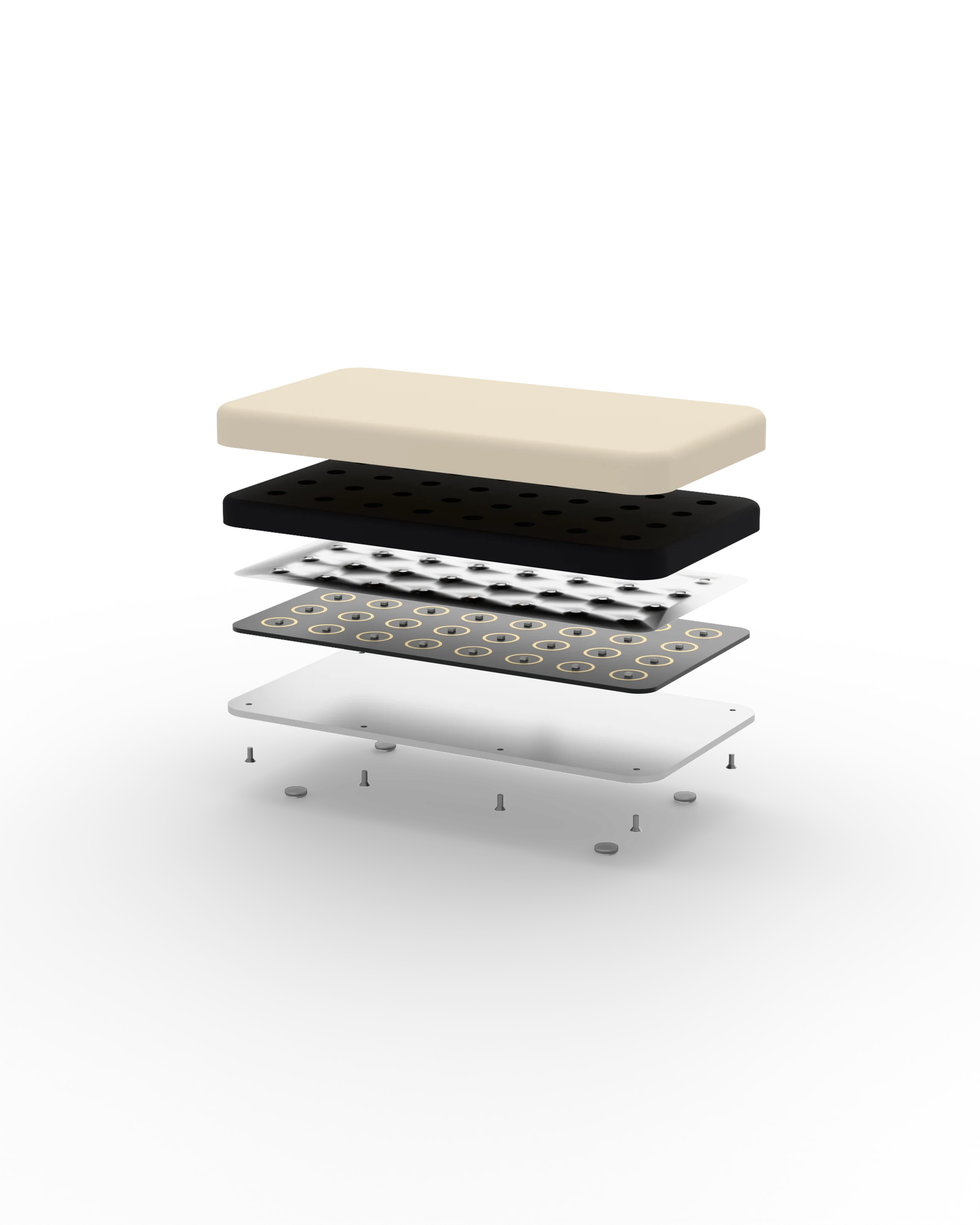
one skin over five layers and eight screws.
a flush top over a hidden collapsing rubber web is not normal practice. flush skins are a thin diaphragm over a metal dome or a tact switch.
1234567
1skin
2chassis
3dome array
4pcb
5base plate
6screws
7feet
123456
a real click through a flush skin. the led sits in the hole of the dome; the ring boss on the skin presses the rim around it.
1skin, with a ring boss under each zone
2chassis deck, an aperture a zone
3snap dome with a centre hole
4led
5pcb
6base plate
schematic, not to scale.
if the dome fit fails: carbon pills moulded into the skin, silent, with a haptic tick from an lra. rejected: capacitive, which cannot tell a resting palm from a press; force-sensing matrices, for cost and drift; inductive; piezo.
1 skin
a compression-moulded sock of platinum silicone, 60 shore a, 1.0–1.2 mm wall. a ring boss under each zone, a beaded lip, a matte pu coat against dust. not overmoulded: a rejected overmould scraps the chassis and the tooling costs 2–4 times as much.
2 chassis
one black mjf pa12 print. a 6–7 mm aperture per zone baffles the light and guides the boss. a groove takes the skin lip; heat-set inserts take the screws.
3 dome array
32 centre-hole metal snap domes, 12–14 mm, 280–400 g, on a peel-and-place sheet.
4 pcb
rp2040 and a 4 × 8 diode matrix on four layers. leds and dome pads on top, everything else underneath. ws2812b-2020 at 12 ma a channel to punch through the pigment, capped at ~350 ma in firmware.
5 base plate
2.5 mm 304 stainless for weight, cut slightly smaller than the body so the skin skirts over it.
6 screws
8–10, to clamp the lip of the skin evenly.
7 feet
4, adhesive.
$52.84 a unit in a batch of 100
batch
all est. no vendor has quoted this geometry.
$16.20 less than the aluminium version, at $69.04. a nylon print and a silicone skin replace the machined housing and keypad.
per unit, usd
skin, pu coated
10.00
chassis and baffle, mjf
10.00
extra screws, inserts, skin-fit labour
1.60
base plate, screws, feet, cable, box, freight, assembly, carried over
15.88
electronics, incl. dome array, brighter leds, 4-layer board
15.36
row
52.84
aluminium version
69.04
saving
16.20
tooling, one-off: about $3,500 for the skin tool, colour match and dome-array die, by published keypad-tool ranges. possibly $4,000–8,000 for a wrap-around skin with undercut sides. the aluminium version needs $2,000.
8–10 weeks from frozen cad.
to quote: rysilicone, diamond hmi (uk) and arrk uk for the skin. jlc3dp for the chassis. snaptron (bl series), nicomatic and asian array houses for the domes.
risks, in order
1the dot of light: too dim, no halo, or bleed. test plaques first.
2a click muffled by the soft skin, and off-centre presses on a 19 mm zone. test 50, 60 and 70 shore a and boss sizes on a 4 × 2 coupon.
3the led in the hole of the dome: a 2020 led needs the 14 mm dome, or a marginal fit in 12 mm.
4skin retention at the corners and the usb-c cut-out; bagging on the flat top.
5colour: the beige match, dust with and without the pu coat, yellowing.
build one
a one-of-one prototype, in the uk: about £300–400 and three weeks, shipping-paced.
parts
day-one test rig
2 × adafruit neotrellis 4 × 4 and a kb2040, from pimoroni or the pi hut
~£45
board
160 × 84 mm 2-layer pcb from jlcpcb, 5 assembled: 32 addressable leds, 32 low-profile tact switches offset from each led, a 4 × 8 diode matrix, the kb2040 soldered on at the edge (usb-c, no fine soldering). a printed puck per zone spreads the press and carries the light aperture
£55–80
skin
cast at home in a two-part 3d-printed mould: dragon skin 20 or 25 nv platinum silicone (bentley advanced materials, ~£40), beige from silc pig white, yellow and brown at 0.2–0.4% total, 1.2 mm wall, 0.5 mm windows, slide std for a drier surface
£120–135 with consumables
chassis, pucks, mould
black mjf pa12 from jlc3dp
£45–80
base plate
2.5 mm 304 stainless, laser cut: jlc sheet metal, fractory or xometry uk
£15–50
hardware
m2 heat-set inserts, screws, feet, a spare kb2040
~£25
several uk prices came from search snippets and the jlcpcb total is an estimate. recheck before ordering.
stages
day 1
order the rig, the silicone and the pcb
days 2–4
cast flat coupons at 0.4, 0.6, 1.0 and 1.5 mm in three pigment loadings over real leds, to choose thickness and brightness
day 4
freeze the cad. order the chassis, mould and plate
days 12–16
cast the skin, budgeting three pours. bring up firmware: circuitpython, animations on the device
days 17–21
assemble and tune
watch for
resin-printed moulds inhibit platinum silicone: wash, give a long uv post-cure and pour a test dab, or use an mjf or aluminium mould. light bleed and a shift in the beige. stack tolerance between puck, switch and skin: print pucks at three heights.
to try the software today, a novation launchpad mini mk3 (~£75) has host-set rgb with built-in pulsing. it cannot become the object, but it validates the daemon. the m-vave smc-pad pocket is not worth modifying: plain midi cannot light its pads, led control is only confirmed on the full-size model through a proprietary protocol, and it is 4 × 4.
api
three layers. the device is dumb on purpose: it shows frames and reports keys. all meaning lives on the host.
device. usb raw hid, usage page 0xff60, 64-byte reports.
0x01 set_frame
host→dev
32 × [r, g, b, anim]
whole grid. anim: 0 solid, 1 breathe, 2 pulse. animated on-device, so no host traffic for motion.
0x02 set_key
host→dev
[index, r, g, b, anim]
one key.
0x03 set_brightness
host→dev
[0–255]
global, capped by the current limiter.
0x04 get_info
host→dev
no bytes
returns firmware version, rows, cols, serial.
0x81 key
dev→host
[index, down]
key event. index = row × 8 + col.
0x7f bootloader
host→dev
magic
reboot to uf2 drive.
host. rowd, in daemon/rowd.py: stdlib python, working today against live rex 0.1.0, api revision 11.
rowd.sh
rowd snapshot                                              # current grid as json
rowd sim                                                   # live terminal simulator, no hardware
rowd press 4 2                                             # same as pressing row 4, key 2
rowd run                                                   # drive a real device over hid

rex ls --json                                              # sessions -> rows
rex window ls -s session --json                            # tabs -> keys, active_window_id -> focus
rex block call -s session -b block program_status          # idle | working | done | blocked | error
rex events --json                                          # push updates (program_status_changed, bell, …)
rex -C client do session.select session_id=… window_id=…   # key press -> jump to tab

web  [focus] [done] [idle] [done]                          # a snapshot
api  [done]  [done] [focus]
ios  [focus]
docs [done]  [working] [working]
local api for other tools, planned. unix socket and http on 127.0.0.1:7769.
local-api.http
GET  /v1/grid                 -> rows, keys, states
PUT  /v1/keys/{row}/{col}     {"state":"blocked"} or {"rgb":[255,64,0],"anim":"pulse"}
POST /v1/rows                 {"source":"rex","session":"docs"}   pin a session to a row
GET  /v1/events  (sse)        key down/up, state changes
rex first. tmux, zellij, claude code hooks (notification, stop) and cursor background agents are thin adapters. any program can light its own key by printing the status escape rex already understands, osc 7501.
identity
the o is one key: 14 square, 2.5 corner. the space to the w is the 5 mm gap between keys. strokes 4, counters 6.